Ant Exterminator
Ant infestations are a common and persistent problem for many homeowners and businesses in Tennessee. The state's varied climate, from humid summers to mild winters, creates an ideal environment for several species to thrive. These tiny invaders not only pose a nuisance but can also cause significant damage and health risks, depending on the species.
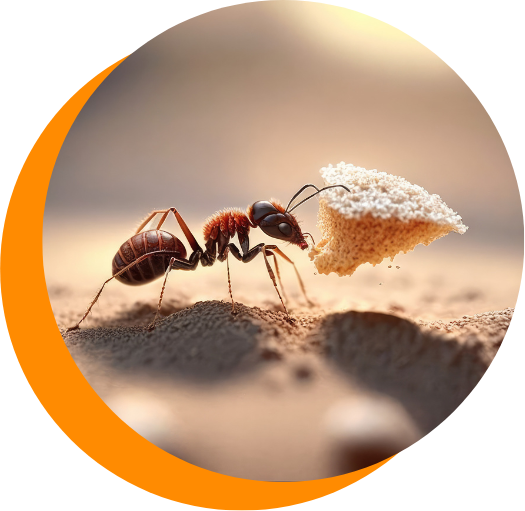
Ants are renowned for their strength, capable of lifting and carrying up to 20 times their own body weight. This incredible feat allows them to transport food,
materials for nest-building, and other items back to their colony, facilitating their survival and expansion.
Some species form supercolonies, vast networks that can span extensive areas, sometimes covering entire landscapes. These supercolonies consist of millions of individuals working in a highly organized manner, demonstrating complex social structures and cooperative behaviors.
They communicate using chemicals known as pheromones. These chemical signals are used for various purposes, such as leading others to food sources, indicating distress, and coordinating attacks or defenses. The sophistication of their communication allows them to maintain complex social organizations and efficiently manage their colonies.
Types And Their Habitats
Carpenter ants are one of the largest species found in Tennessee and are primarily known for their wood-boring habits. They do not eat wood but excavate it to create tunnels for their nests, which can lead to significant structural damage over time. They typically inhabit moist or decaying wood often found in older trees, stumps, and sometimes in water-damaged structures.
Fire ants are easily recognizable by their aggressive behavior and painful stings. They prefer sunny, open areas and are commonly found in lawns and other grassy areas, including agricultural fields. Their mounds can disrupt agricultural activities and damage equipment, and stings can cause severe allergic reactions in some people and animals, making them a serious health hazard.
Pavement ants, so named because they often nest under and around pavement, are less destructive but can become a nuisance due to their large numbers. They typically enter buildings through cracks in the foundation in search of food, often leading to infestations in kitchens and pantries.
An uncommon ant species found in Tennessee is the Allegheny mound ant. Unlike the more familiar species, the Allegheny mound is particularly notable for its large, impressive mound-building activity, which can interfere with landscaping and agricultural areas. They construct massive mounds of soil in open fields and pastures, which can reach several feet in height and width. They serve not only as their home but also as solar incubators that help regulate the temperature within and can cause significant damage to lawns and fields.
Impact On Homes And Businesses
Infestations can lead to structural damage, food contamination, and disruptions in business operations. Pharaoh ants are notorious for their ability to infiltrate almost any space, making them particularly troublesome. They often nest within wall voids, behind baseboards, and in other hidden areas within buildings. Over time, their extensive nesting and foraging can disrupt electrical systems and cause damage to insulation materials, which may necessitate expensive repairs.
Thief ants, so named because they steal from other colonies, are also a concern for food contamination. Their extremely small size allows them to access most containers or spaces where food is stored. These nuisances are attracted to high-protein foods, and once they establish a pathway to a food source, they can quickly contaminate supplies.
Argentine ants, while less aggressive, can still cause significant business disruptions, especially in the hospitality and food service industries. In areas with heavy foot traffic, such as hotels and restaurants, their presence can lead to customer dissatisfaction, negative reviews, and ultimately, a loss of business.
Common Misconceptions
Ant control often falls prey to a variety of misconceptions that can hinder effective management and lead to prolonged infestation issues. The following are just two of the many false bits of information about combating ant infestations that people mistakenly believe:
- One common belief is that pouring boiling water or vinegar over colonies can eliminate them. While boiling water might kill some on contact, it rarely reaches the queen hidden deep within the nest, thus failing to eliminate the colony at its source. Similarly, vinegar may disrupt ant trails.
- Many believe that baits available in retail stores can resolve severe infestations. Although these products can be part of an effective control strategy, they often provide only a temporary solution.
Don't let ants turn your home or business into their playground. At Dead End Exterminating, we understand the challenges and frustrations of dealing with an infestation. Our expert team is equipped with the knowledge and tools necessary to effectively eliminate pests and prevent future invasions. Contact us today for a comprehensive assessment in Philadelphia and the surrounding area.
Frequently Asked Ant Questions
Q1: Are there any species that are exclusively carnivorous?
A1: Army ants are exclusively carnivorous, engaging in large-scale raids where they devour other insects and small animals. This species is nomadic, meaning they create temporary camps rather than permanent nests as they move through their environment.
Q2: What is the fastest ant in the world?
A2: The Saharan Silver Ant is the fastest ant globally, capable of running up to two miles per hour. This speed helps it survive by allowing quick foraging in the brief moments when the Sahara Desert surface isn't too hot.
Q3: Do they sleep?
A3: Ants do sleep, but their sleep is not like human sleep. They take numerous short naps throughout the day and night, each lasting just a few minutes, which helps them stay active and alert.
