Mosquito Control
Mosquitoes are among the oldest species that have roamed the Earth, with their existence tracing back to the Jurassic period, over 200 million years ago. Fossil records show that these insects have been a consistent presence, adapting through drastic climatic changes and mass extinctions that wiped out many other species. Interestingly, some ancient mosquitoes were significantly larger than their modern descendants, with fossils indicating wing spans of up to an inch long, which is nearly three times the size of those found today.
Mosquitoes Have Been Adapting Since The Time Of Dinosaurs
Their evolution has been profoundly influenced by their ability to adapt to diverse environmental conditions. Over the centuries, they have developed features that enable them to thrive in almost every ecosystem on the planet, from dense tropical rainforests to arid deserts.
This complex historical journey not only underscores their resilience but also highlights the evolutionary adaptations that have enabled them to be so pervasive and successful as a species. These adaptations include their breeding capabilities in minimal water, their sensory organs that can detect CO2 emissions from considerable distances, and their notorious feeding habits, which have played parts in their long-standing history.
Tennessee is home to several species, each with unique characteristics and behaviors that affect their interaction with humans and the environment. The following are two examples of the more common species found in Tennessee.
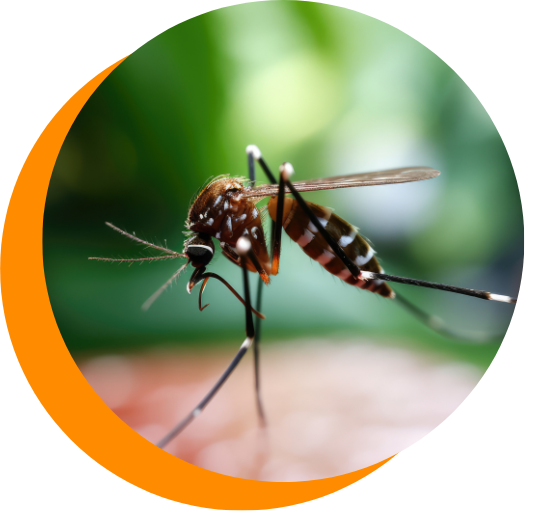
The Asian tiger mosquito is a relatively recent arrival in Tennessee, first detected in the 1980s. It is easily recognizable by its striking black and white striped legs and body, which give it its common name. This species is extremely aggressive and is known for its persistent daytime biting behavior. Unlike many others, the Asian tiger mosquito is a container breeder, meaning it lays its eggs in small pools of water found in items like buckets, bird baths, or discarded tires. Its adaptability to various environments and its preference for human blood make it a significant vector for diseases such as dengue fever, Zika virus, and West Nile virus.
The common house mosquito is widespread across Tennessee and is particularly known for its activity during dusk and dawn. This species tends to breed in larger bodies of stagnant water, such as ponds or drainage ditches. The common house mosquito is a primary vector for the West Nile virus, which has been a public health concern in various parts of the United States. It is less aggressive in its biting habits compared to the Asian tiger, but its ability to transmit diseases makes it equally dangerous.
Attraction To Humans
The main attractors to humans include body heat, carbon dioxide (CO2), and specific body odors. Mosquitoes have highly sensitive receptors that detect the heat emitted by warm-blooded animals, guiding them to their targets from a distance. CO2, which humans and other mammals exhale, is a potent attractant, capable of drawing them from over 100 feet away. Body odors also play a role, influenced by genetics, bacteria on the skin, and substances such as lactic acid and ammonia in sweat. Additionally, certain perfumes and scented lotions can mimic these natural body odors, inadvertently increasing a person’s attractiveness to mosquitoes.
Dark and humid areas around a home also provide ideal resting places for adults. Thick shrubbery, tall grass, and shadowed corners can shield mosquitoes from direct sunlight and predators, offering safe havens close to human activity.
Unusual Facts About Mosquitoes
- Flying in the Rain: Despite their small size, they can fly in the rain. A raindrop is many times the weight of a mosquito, yet due to their low mass, raindrops only slightly disturb them rather than crushing them. Their strong exoskeletons help them withstand the impact, and they use the rain to their advantage to stay hydrated.
- Only females bite and feed on blood, which they require to develop their eggs. Males, on the other hand, feed exclusively on nectar and other sweet substances. This dietary difference is important for their reproduction process.
- Supersonic Wings: Mosquitoes flap their wings remarkably fast, from about 400 to 600 times per second. This rapid flapping is what produces their distinctive and often irritating buzzing sound.
- In colder regions, certain larvae have been observed 'ice skating' on frozen water bodies. This rare behavior helps them move and feed under thin ice, where they can survive in a dormant state.
Potential Allergic Reactions
Bites are generally harmless and result in minor symptoms, including itching, swelling, and redness around the bite area. These reactions are the body's immune response to the mosquito's saliva, which acts as an anticoagulant while the insect is feeding. However, some individuals may experience more severe allergic reactions to mosquito bites.
Don't let mosquitoes turn your home into their breeding ground. Contact Dead End Exterminating today and take the first step towards a mosquito-free environment. Whether it's your backyard, patio, or garden, we’re here to provide effective control that lets you reclaim your favorite places.
Frequently Asked Mosquito Questions
Q1: Can mosquitoes really be attracted to certain blood types more than others?
A1: Yes, research suggests that they are more attracted to people with Type O blood compared to those with Type A, B, or AB blood. Individuals with Type O blood
emit certain chemical signals through their skin more intensely than others, making them more appealing.
Q2: Is it true that eating garlic can repel mosquitoes?
A2: The idea that eating garlic can repel mosquitoes is a common myth. While garlic does have some natural repellent properties when applied to the skin, there is no scientific evidence to support that consuming garlic can provide repellent effects against mosquitoes.
Q3: Why do mosquito bites itch more at night?
A3: Mosquito bites might seem to itch more at night simply because there are fewer distractions as you try to sleep. Additionally, the body's production of cortisol, a natural steroid that suppresses inflammation, is lower at night, which could exacerbate the itchiness of bites. The lack of other sensory input during the quiet of night might also make the itching sensation more pronounced.
