Bed Bug Exterminator
Bed Bugs have been unwanted companions of humans for thousands of years, with evidence of their presence dating back to ancient civilizations. Initially, they were merely a nuisance in the homes of our ancestors, thriving in the same environments as humans due to their need for human blood. Their timeline is closely tied to human migration and expansion.
The widespread use of DDT and other potent insecticides in the mid-20th century led to a dramatic decline in populations. For a time, it seemed as though they were a pest of the past, largely eliminated in developed countries. However, this success was short-lived. By the late 1990s and early 2000s, they began to make a formidable comeback. This resurgence has been attributed to several factors including increased international travel, the ban on previously effective pesticides due to health concerns, and the remarkable ability to develop resistance to chemical treatments.
Features, Traits, And Behaviors
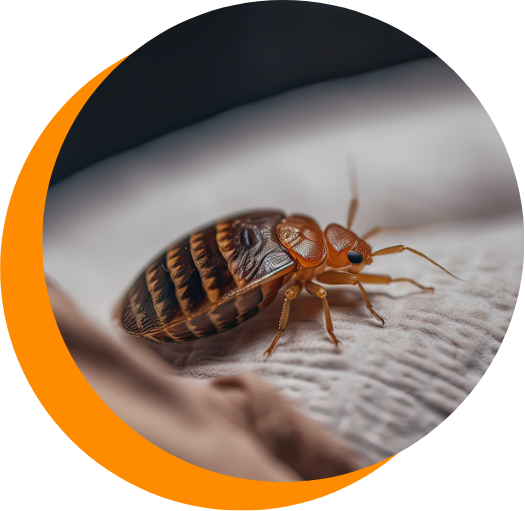
One of the most distinctive features of Bed Bugs is their ability to survive for months without feeding, a trait that few other pests have. Their bodies are covered with microscopic hairs that give them a banded appearance. They are also characterized by their slow movement on surfaces and lack of wings, distinguishing them clearly from other pests like fleas and ticks, which may jump or fly.
They are adept at latching onto moving objects and surfaces. One common pathway for these pests to enter homes is through luggage and personal belongings, especially after stays in hotels or other accommodations that might be infested. Travel bags and suitcases serve as perfect vehicles for these pests to move from one place to another.
Purchasing or acquiring used furniture without proper inspection can unwittingly bring them directly into living spaces. Additionally, common visitor areas and shared living spaces such as apartment complexes, dormitories, and shelters are high-risk zones for dispersal.
Behaviorally, they are mostly active at night, which is when they typically feed. During the day, they tend to hide in groups in secluded areas, such as mattress seams, box springs, bed frames, and nearby furniture. Observing these nocturnal activity patterns and their aggregation in hidden places can be a strong indicator of their presence.
Bites And Their Potential Risks
Bites are often the first physical sign noticed by individuals living in an infested area. These bites typically appear as small, red, itchy welts that may be arranged in a linear or clustered pattern on the skin, usually on exposed areas such as the face, neck, arms, and hands.
Comparatively, Bed Bug bites can be mistaken for bites from other insects like fleas or mosquitoes. However, unlike mosquito bites, which are more randomly placed, Bed Bug bites are more likely to occur in a straight line. Misconceptions also persist about their bites; for instance, not everyone reacts to bites, leading some to mistakenly believe they do not have an infestation.
Bed Bug bites can lead to various allergic reactions, ranging from mild to severe. Some individuals may experience intense itching, redness, and swelling around the bite sites, while others might have minimal to no reaction. In rare cases, more severe allergic responses can occur, necessitating medical attention.
The constant stress and anxiety about being bitten can lead to psychological distress, including anxiety and symptoms of post-traumatic stress disorder (PTSD). The social stigma associated with infestations can also lead to isolation and embarrassment, exacerbating mental health issues and impacting the overall quality of life.
Misconceptions And Why They're Bad For Business
A common misconception is that these bloodsuckers target individuals based on hygiene or socioeconomic status. In reality, they are not discriminatory in their choice of host; they are attracted to the presence of warm bodies and the carbon dioxide produced by breathing.
Furthermore, many believe that they are attracted to clutter because it is dirty, but in fact, they are drawn to clutter because it provides more hiding places. This emphasizes the need for professional intervention that goes beyond simple cleaning.
For hospitality businesses like hotels and motels, even a single report of Bed Bugs can result in negative reviews, loss of customers, and costly litigation. The need to close rooms for treatment also leads to lost revenue, compounded by the cost of professional pest control services.
Don’t let Bed Bugs take over your space. Contact Dead End Exterminating today for reliable, professional pest control solutions that ensure your home or business remains pest-free. Trust us to put an end to your pest problems once and for all.
Frequently Asked Bed Bug Questions
Q1: Do Bed Bugs have any natural predators?
A1: Yes, they do have natural predators, although these aren't typically effective for controlling infestations in human habitats. The most common predators include spiders, cockroaches, and some species of ants. However, relying on these predators for Bed Bug control is impractical in most domestic and commercial environments.
Q2: Can they survive in electronic devices?
A2: Surprisingly, they can find their way into electronic devices such as laptops, alarm clocks, and televisions, where they hide in the crevices. The warmth generated by these devices can attract Bed Bugs, but their presence there is more about hiding than living permanently. Still, this makes treating infestations more complex, requiring careful attention to such unexpected hiding spots.
Q3: Can they be repelled by natural substances?
A3: There are anecdotal reports and some preliminary studies suggesting that certain natural substances like essential oils may have repellent properties. Substances such as lavender, peppermint, and tea tree oil are sometimes cited as being effective. However, these are not reliable methods for controlling or eliminating infestations and are best used as supplementary measures in conjunction with professional pest control services.
